28 Insider Tips to Travelling in Italy

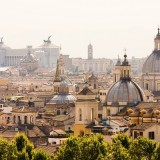
Skyline of the Eternal City, Rome. Credit: ciaotutti.nl
Nearly 80 million people travel to Italy every year, placing it second behind France as the most visited country in the world. It’s not surprising: Italy is less than one third of the size of Ontario, yet has an incredible diversity of landscapes, cultures, architecture, and people. You could spend a lifetime travelling Italy and never feel like you’ve quite seen it all.
Despite this, Italy is not always the easiest place to travel. Tourist traps, pickpockets… we’ve all heard the stories. There are, however, many ways to ensure that your stay in Italy is as fabulous as its made out to be in old Hollywood movies. After having lived, worked, and travelled throughout Italy, I’m sharing 28 insider tips to making the most of your holiday.
Wining and Dining

Dinner with a view in Umbria. Credit: Casa Fontana Umbria.
- We might be used to paying cover at a club, but at a restaurant? Many restaurants—especially those in touristy locations—charge a cover called coperto. Coperto ranges from 1,00 to 3,50 euros per person. Don’t be fooled; coperto doesn’t substitute as a tip for your cute Italian waiter—the money goes directly into the owner’s pockets.
- You know that cute Italian waiter? Tip him or her with cash. Waiters often don’t receive the tip added to the bill when customers pay by card.
- When ordering water at a restaurant, expect to pay up to 3,00 euros for a one-litre bottle. If you don’t want to pay, you can insist on getting tap water.
- Be aware of the myriad of tourist restaurants lining each city’s main squares. Here, you’ll often find yourself paying for the view of the square, rather than the quality of the food. Relax and enjoy the atmosphere of the bustling piazza or wander down an adjacent alley for a more reasonably priced (and often better tasting) meal.
- Don’t be surprised when you step into a restaurant bathroom and find a hole in the ground where the toilet should be. It’s intended for both men and women.
- Finding a grocery store in the centre of a major city is like looking for a needle in a haystack. Due to a law designed to protect restaurant owners, grocery stores in tourist areas must keep their signage to a minimum. Ask a local to direct you to the nearest supermarket.
Language tip: Where is the grocery store? – Dov’è il supermercato?
- If you have a jam-packed day of sightseeing planned, don’t waste your valuable time at a sit-down restaurant. Grab a slice of pizza or focaccia at an Italian bakery or panetteria. I promise it will be delicious.
Trains, Planes and Automobiles

Sunset over the Alps and the Po River in Turin, Italy. Credit: Cristiano Berta.
- When travelling around a city by bus, purchase a ticket in advance. Tickets are sold at convenience stores called tabaccheria, marked by a sign with a big ‘T’. Don’t forget to validate your bus ticket in the machine after stepping on. Ticket controllers are always out and about. And they’re terrifying.
Language tip: Two bus tickets please. – Due biglietti per l’autobus per favore.
- Train tickets can be bought at ticket vendors or on machines. Validate your ticket in the green machines near the platforms before hopping on, otherwise you could risk being fined.
- Often regional trains (ones that stop in every town rather than going direct between cities) arrive late. If you take a regional train and then have to transfer, make sure you give yourself enough time—at least 15 minutes—to catch your next train.
- Italian cities are notorious for their lack of parking. We can’t really blame them, though, considering most date back to an era of horses and carriages. If you’re planning to rent a car, be prepared to pay for parking anywhere in the city. Carefully read the hours and payment instructions to avoid a hefty fine.
- Most major highways in Italy are toll routes and can cost anywhere between 4-15 euros per 100km. If you’re travelling on a budget, use Via Michelin to plan a route that avoids tolls.
- If your heading to or from the airport in a cab, agree on a fixed price prior to starting the journey. Some cab drivers try to up the price at the end, but be firm on what you agreed on.
- When taking a cab in the city, be sure the driver starts the meter so they can’t charge an absurd price afterwards. Keep in mind that the base price increases by a euro or two between 11pm and 6am in some cities.
Money Related
- Don’t arrive without a wallet full of euros. The exchange rate in your home country will almost always be better than in Italy. Plus, you can avoid the steep service fee.
- Don’t rely on ATMs. Taking out money from an ATM in Italy is not a privilege or a right. It’s a fluke.
- Always carry cash. Debit machines rarely “work” – at least that’s what shop and restaurant owners tell us.
Sightseeing

The Sacra di San Michele, an abbey dating back to 966 nearby Turin in north western Italy. Credit: Andrew and Maria from ‘Mi o My Italy’.
- Most museums, castles, abbeys, and other historical sites are closed on Mondays. Keep this in mind when planning your daily adventures.
- Pack your student card. Most tourist sites offer a discounted entrance fee to university students.
- When arriving at major tourist sites like the Colosseum or the Vatican, you’ll instantly be bombarded with people asking if you’d like to join a guided tour. Although they may be knowledgeable, most are not certified or authorized guides. Ask at the ticket booth to join a legitimate tour if that’s what you’d prefer.
For the Shopaholics
- You thought siestas were only for Spaniards? Think again. Shops in Italy tend to open around 10am and close for lunch from 12:30pm to 3:30pm.
- Italy boasts the largest designer outlet stores in Europe. There is usually one outside every major city.
The Great Outdoors

The beach from above, in Positano on the Amalfi Coast. Credit: Victoria Boyd.
- When arriving at the seaside for a day of fun in the sun, spend 10 minutes asking around about the price and quality of the beaches. Many beaches ask an entrance fee, which includes a lounge chair and umbrella. Interspersed you’ll find public (aka free) areas called spiaggia libera, but they are sometimes overcrowded or littered with garbage. This isn’t to say that you should pay to sit on the beach, just take the time to look around and find the option that suits you best in that particular place.
- Many head to Italy searching for the warmth of the Mediterranean sun, but the Italian Alps often offer much cheaper skiing holidays than neighbouring Switzerland or Austria.
Miscellaneous

Lake Maggiore near Milan. Credit: Victoria Boyd.
- Safety first: know what to do in case of an emergency. Dial 113 for the police and 118 for the ambulance.
Language tip: Help me – Aiuto [ay-you-toe]
- Watch your belongings. It’s no secret, Italy is known for its petty theft problem. I know (unfortunately) from experience that the back of your chair or the floor by your seat are not the place to put your bag. Keep it on your lap.
- Try learning a few words in Italian before arriving. Many Italians don’t speak English. Plus, everyone loves a foreigner who makes an authentic effort to engage in the local language.
Language tip: Thank you – Grazie. Good morning – Buongiorno. Have a nice evening – Buona serata.
- And lastly, my most important piece of advice for travelling in Italy: step off the beaten path. Yes, I urge you to visit Rome, Florence, and Venice if you are lucky enough to have those opportunities. But Italy is so much more than these typical tourist destinations. It’s a 1100 year old abbey towering on a mountain over a remote valley, the bluest of blue water on a deserted beach, the smells and sounds of tiny village market where no one knows a word of English. These are the sights that make Italy, well, Italy.
Share your tips for travelling in Italy in the comments section below!



Latest posts by Victoria Boyd (see all)
- Norway Untouched: A Journey into the Fjords - January 23, 2018
- Three Days, Three Cities: Belgium’s Brussels, Ghent and Bruges - December 12, 2017
- 5 Tips for Taking Better Travel Photos - November 14, 2017

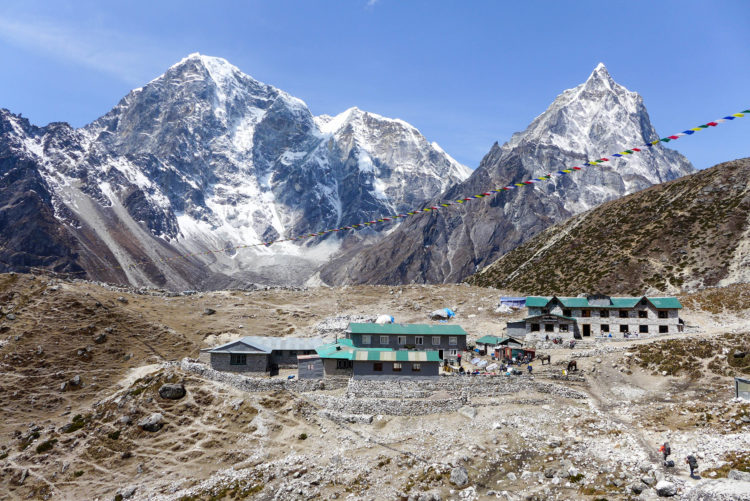 Almost all the tea houses in