Three Days, Three Cities: Belgium’s Brussels, Ghent and Bruges

Brussels, Ghent, or Bruges. Have you been? Which city is your favourite?
Three cities in three days? It may sound crazy, but it’s certainly not impossible. Although you may have to pick and choose the sights you want to see, a long weekend is the perfect length of time to get a taste of Belgium’s rich history and culture. Here’s a guide to get you started.
Friday afternoon: Arrive in Brussels
After checking into your hostel or hotel, head downtown for a night of history, cuisine, and of course, beer.

The Grand Place’s elaborate gothic architecture is a spectacular sight. You’ll be even more mesmerized if you visit during the Flower Market, when the square is covered in a massive carpet of fresh begonias. Credit: Wikipedia.
Begin your evening with a stroll through Brussels’ main square, the Grand Place. You’ll find yourself surrounded by opulent edifices housing the Town Hall and the Museum of the City of Brussels. Although the existing buildings of the Grand Place were constructed in the 15th and 16th centuries, the location has been used as a market and trading post since the 10th century.

Crowded with travellers and Belgians alike, you’ll instantly feel at home at Poechenellekelder: dark wood ceilings hang low overhead, the walls are covered in hundreds of strange photographs, and amiable servers are more than happy to describe each beer on the extensive menu. Credit: Poechenellekelder.
Continue your tour of Brussels by stepping onto one of the many narrow cobblestone alleys leading away from the Grand Place. Make your way to a pub called Poechenellekelder to celebrate your arrival in Belgium with a seemingly endless selection of the country’s best stout, blonde, amber, and trappist beers.
Just outside the pub you’ll find one of Brussels’ most famous landmarks, Manneken Pis. Dating back to 1618, Manneken Pis is a small bronze sculpture of a naked boy peeing. There are several legends behind the statue’s origin, all of which make it even more of a must-see attraction for travellers.

Les Chapeliers in Brussels, near the Grand Place, combines a warm atmosphere and historical architecture with good service and high-quality Belgian cuisine. Credit: Les Chapeliers
Stop for dinner at Les Chapeliers. Although the restaurant is a little pricey, it offers a cozy alternative to the dozens of anonymous tourist traps nearby.
Saturday morning: Catch a 35-minute train to Ghent

Ghent offers a glimpse into a medieval village, mixed with the busy hustle and bustle of a modern day city. Credit: Victoria Boyd.
With only a day in Ghent, don’t waste time walking to the historical centre. Save yourself 30 minutes and take bus number 1 from the train station directly to the city’s core.

View from the belfry tower. Over the past centuries, the belfry has served to announce the time, drown out the sound of thunder, signal various warnings, and monitor the city for any sign of approaching enemies. Credit: Victoria Boyd.
Admire the city from the top of the belfry of Ghent. This 91-meter-high medieval clock tower is the tallest belfry in Belgium. Its construction began in 1313, but was continually interrupted by wars, plagues, and political turmoil, so it didn’t reach completion for 67 years.

Ghent is scattered with grand cathedrals. Step inside every single one, even just for a moment, you’ll always be amazed. Credit: Victoria Boyd.
Although the external façade is currently being restored, visiting Saint Bavo’s Cathedral is a must. Its gothic design dates back to the 14th century, yet the site has assumed many architectural appearances since its consecration in 942. Inside the cathedral you’ll find a painting titled the Adoration of the Mystic Lamb by two renowned Belgian artists, Hubert and Jan van Eyck. The painting is considered one of the most significant works of the early Renaissance, as well as one of Belgium’s greatest artistic masterpieces.

Ghent is best enjoyed strolling the streets with a camera in hand. Admire the wide canals and grand architecture, bigger and taller than what you’ll soon see in quaint little Bruges. Credit: Cristiano Berta.
Stop for a quick lunch at Souplounge where you’ll find a customizable selection of soups and sandwiches. You can dine in or take away, but I would suggest finding a sunny spot next to one of the many canals to sit and enjoy your lunch.

Belgian waffle. Credit: Victoria Boyd.
Keep your eyes and nose open for a waffle shop. Chances are you will probably smell their delicious scent before you actually see them, since the tiny shops are normally crammed between other larger restaurants. Top your waffle with chocolate sauce or whipped cream, or enjoy it like a true Belgian: plain with a little powdered sugar sprinkled on top.
Have more time? Check out some of Ghent’s other top sights: Gravensteen Castle, Museum of Fine Arts, Saint Nicholas Church, Saint Michael’s Church, S.M.A.K Museum of Contemporary Art.
Saturday afternoon: Catch a 25-minute train to Bruges
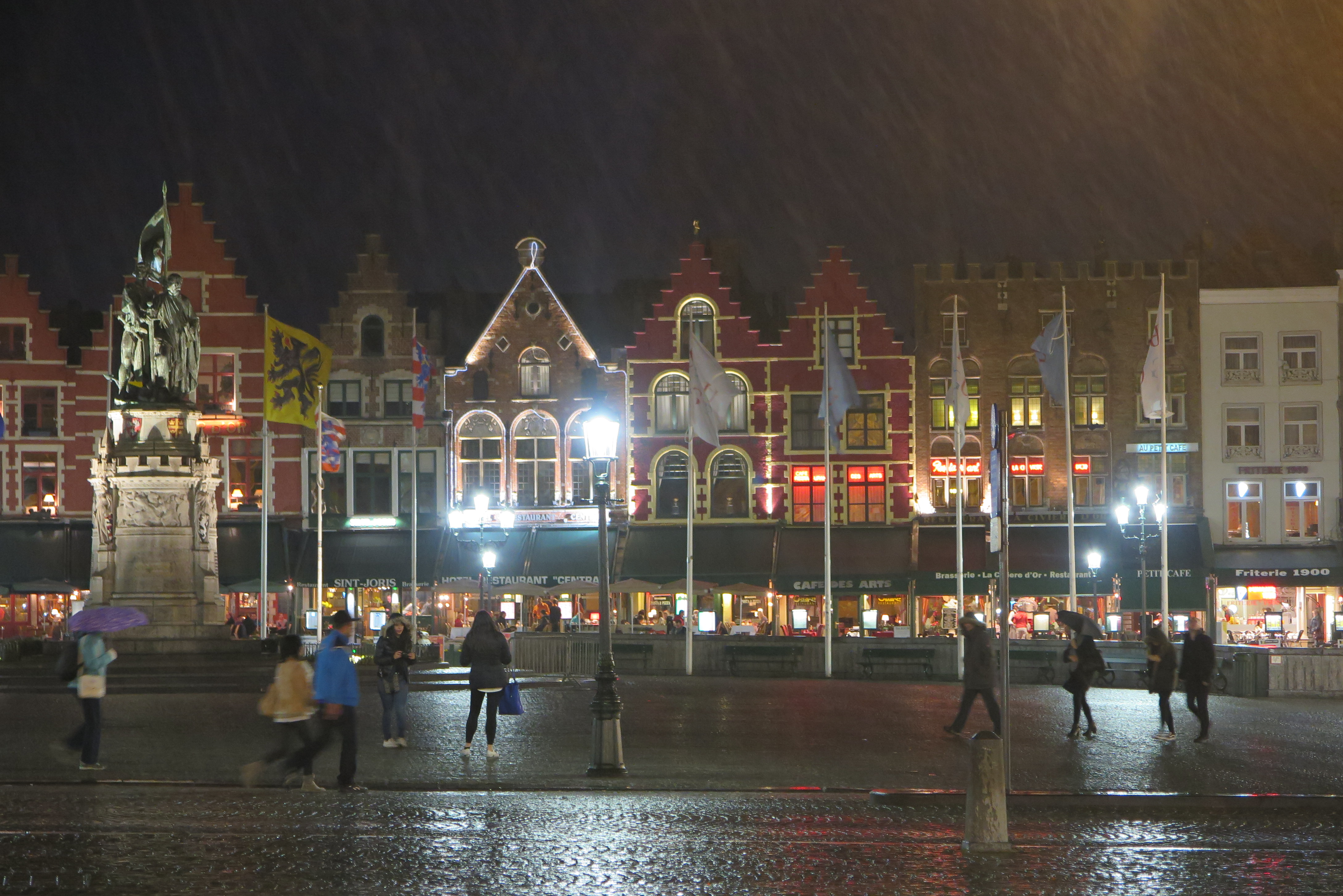
Bruges Markt in typical Belgian weather. Credit: Victoria Boyd.
After checking into your accommodation for the night, head to the medieval heart of the city, known as the Markt. Within the square you’ll see the 12th-century belfry of Bruges, the Provincial Court, and several medieval homes that have now been converted into shops and restaurants.

Unlike Ghent, Bruges seems almost untouched by modernity. Although some say it’s more touristy, the city’s quaint houses and narrow canals had me feeling like I’d been transported back in time. Credit: Victoria Boyd.
Nearby, you’ll find the Basilica of the Holy Blood, a 12th century chapel that houses a venerated relic of the Holy Blood that was allegedly collected and brought from the Holy Land by the Count of Flanders. The lower chapel is comprised of untouched Romanesque architecture emitting a calmness that will take your breath away.
Due to its close proximity to the sea, Bruges is famous for its clams and other seafood dishes. You’ll find such cuisine at almost any restaurant for 20-25 euros per plate. Search a spot off the beaten path, where the atmosphere and food will likely be more authentic than what you’d find in a more well-trodden location.

Even shared between two, a Le Trappiste beer tasting will leave you feeling a little more fuzzy than when you arrived. Credit: Victoria Boyd.
After dinner enjoy a beer tasting at Le Trappiste, a pub in an arched brick cellar of a building from the middle ages. Sample five beers for 10 euros; the friendly owners will be happy to help with your selection.
Sunday morning: A day in Bruges

Like a miniature village in an enchanting snow globe, Bruges appears untouched by time. Credit: Victoria Boyd.
A trip to Belgium isn’t complete without a visit or two (or three!) to one of the many chocolate shops. Although you’ll find one at almost any street corner, La Belgique Gourmande has locations in both Bruges and Brussels, and offers a delicious selection of handmade chocolates. Choose seven chocolates for three euros and enjoy some free samples while you’re at it. Belgium really is every chocolate lover’s dream!
If you’re in the mood for some local art, head to the Groeninge Museum. The museum showcases six centuries of Flemish and Belgian paintings, including Flemish Primitive art, Renaissance and Baroque styles, Flemish expressionism, and Belgian symbolism and modernism.

A boat tour provides the perfect opportunity to appreciate Bruges from a completely different angle. Credit: Victoria Boyd.
Some say that a visit to Bruges isn’t complete without a boat trip through the canals. Hop aboard a ferry at one of five docks for a half-hour trip (seven euros) through the city.
Have more time? Visit the Church of Our Lady Bruges, St. Salvator Church, Loppen Castle, or the Gruuthusemuseum of Applied Arts.
Sunday evening: Take a one-hour train back to Brussels
After checking in to your final night’s stay, step back into the city to enjoy your last night in Belgium.
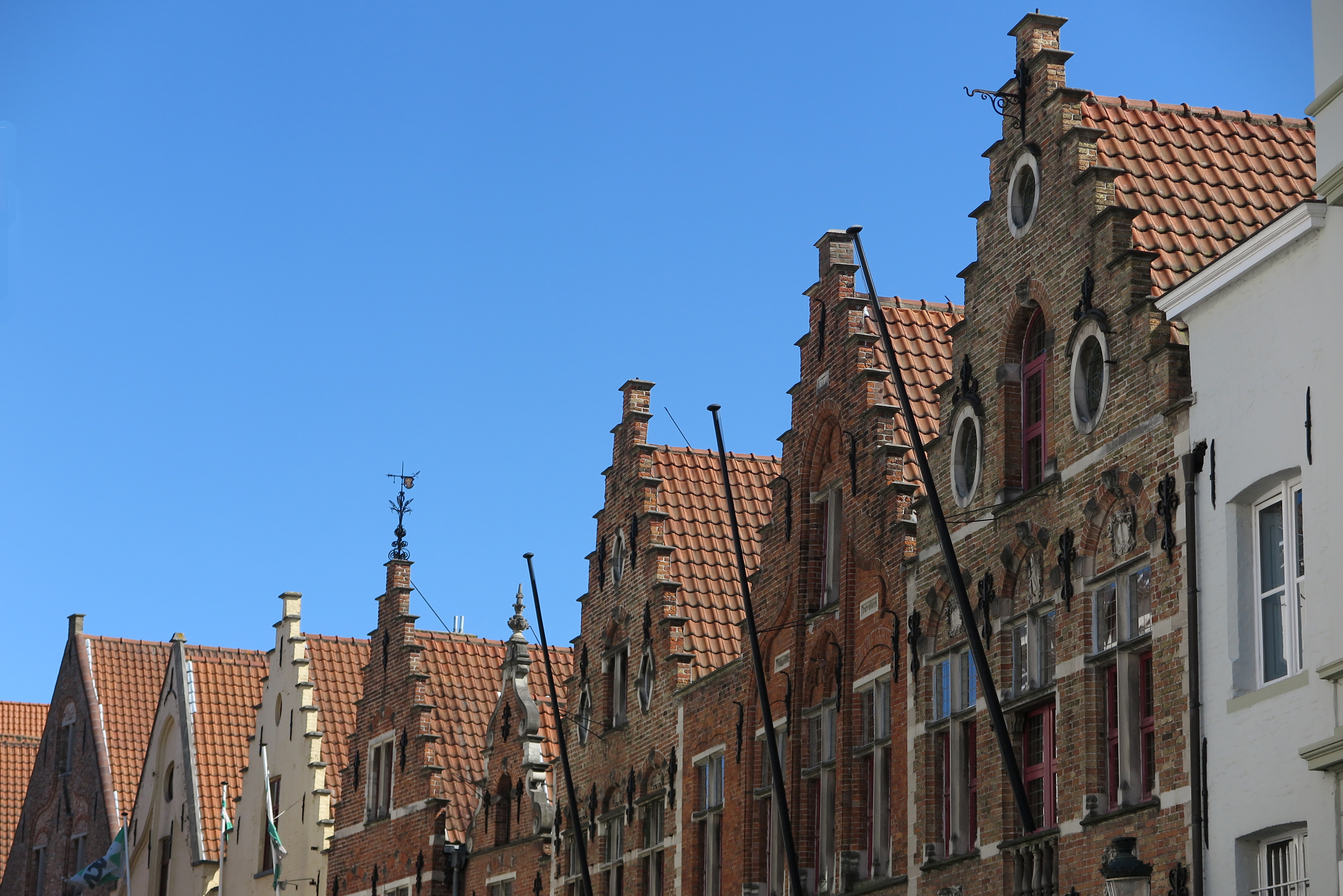
Belgium is a history and architecture lover’s dream. If you look closely, you’ll find that many buildings have a small plaque that reveals the year it was constructed. Many date back to the middle ages! Credit: Victoria Boyd
Perhaps you’re a little tired or running low on funds after a weekend of travel, so keep it low-key and grab some fresh Belgian frites for dinner. Although the French would disagree, many say that that “French” fries actually originate from the 1600s in Belgium. These double deep fried fries are served with a large variety of Belgian sauces, and can be paired with a burger, hot dog, or brochette.
Monday morning: Home bound
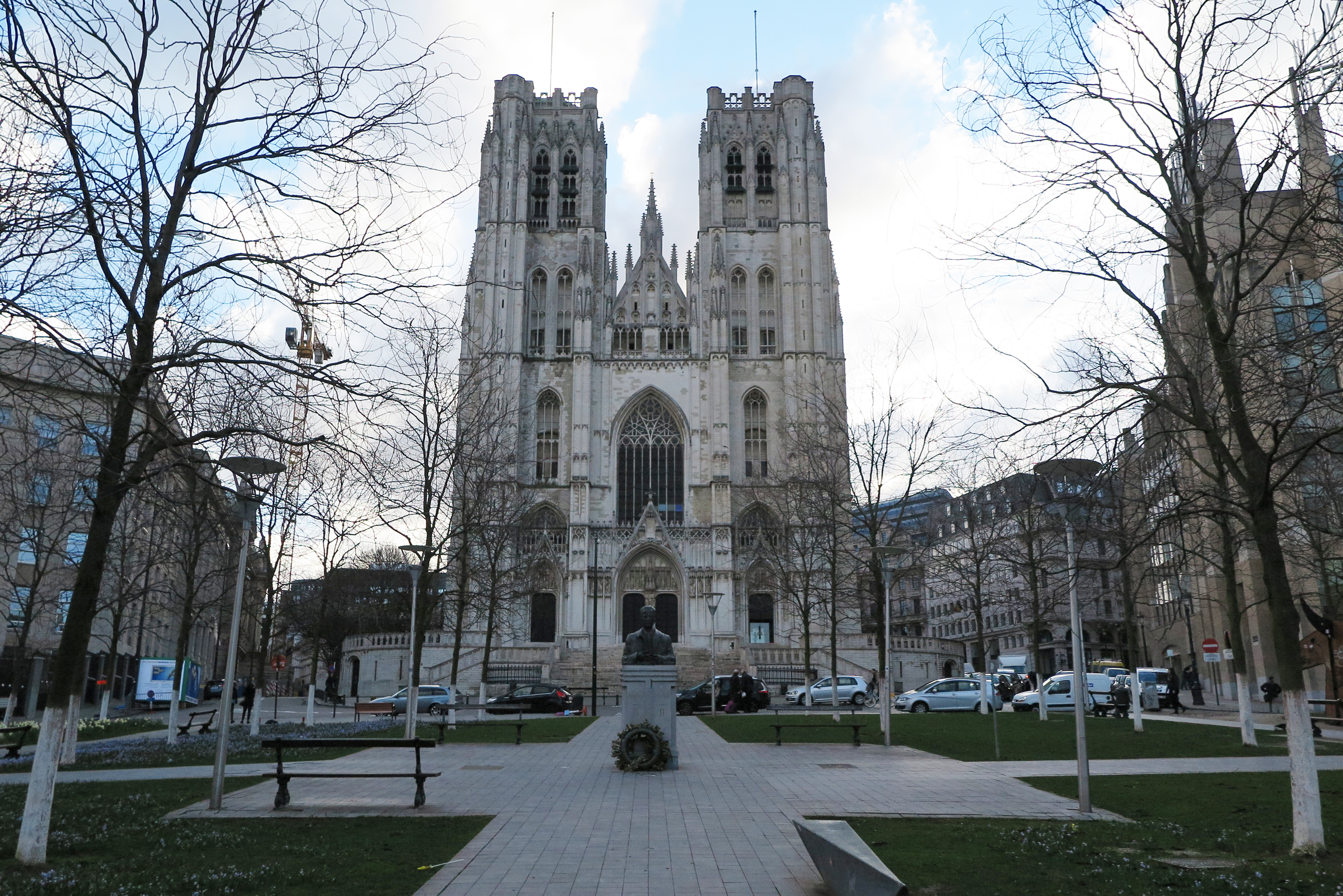
Cathedral of St. Michael and St. Gudula. Credit: Victoria Boyd.
Before heading home, stop by the Cathedral of St. Michael and St. Gudula. Reminiscent of Paris’ Notre Dame, this French gothic style church is amazing both inside and out. Once inside, let yourself be enchanted as sunlight dances through the cathedral’s enormous stained glass windows.
Have more time in Brussels? Visit the Atomium, Mini Europe, or the Royal Museums of Fine Arts as well.
This post was originally published on Anew Traveller on April 21st 2015.



Latest posts by Victoria Boyd (see all)
- Norway Untouched: A Journey into the Fjords - January 23, 2018
- Three Days, Three Cities: Belgium’s Brussels, Ghent and Bruges - December 12, 2017
- 5 Tips for Taking Better Travel Photos - November 14, 2017



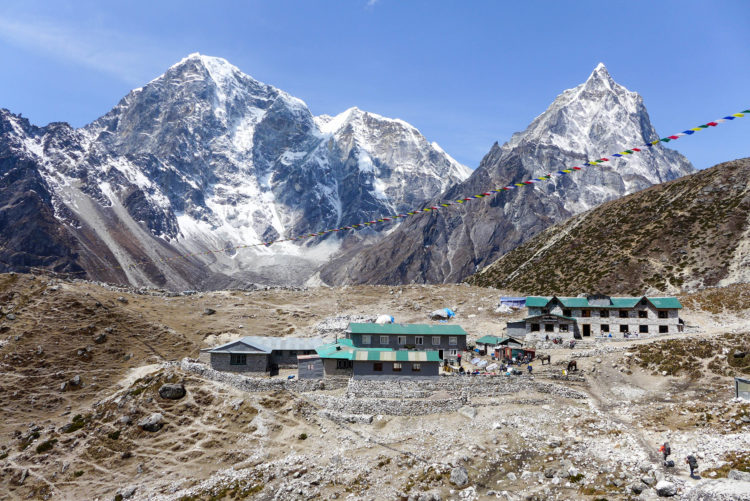 Almost all the tea houses in